Share
f you’re looking for more painting ideas, then you love this 53 flower painting ideas post and this best flower painting techniques for beginners post.
Palette
Professor Ria's Notes
Feedback for Sketch: Lily Flower Painting
Technical Analysis
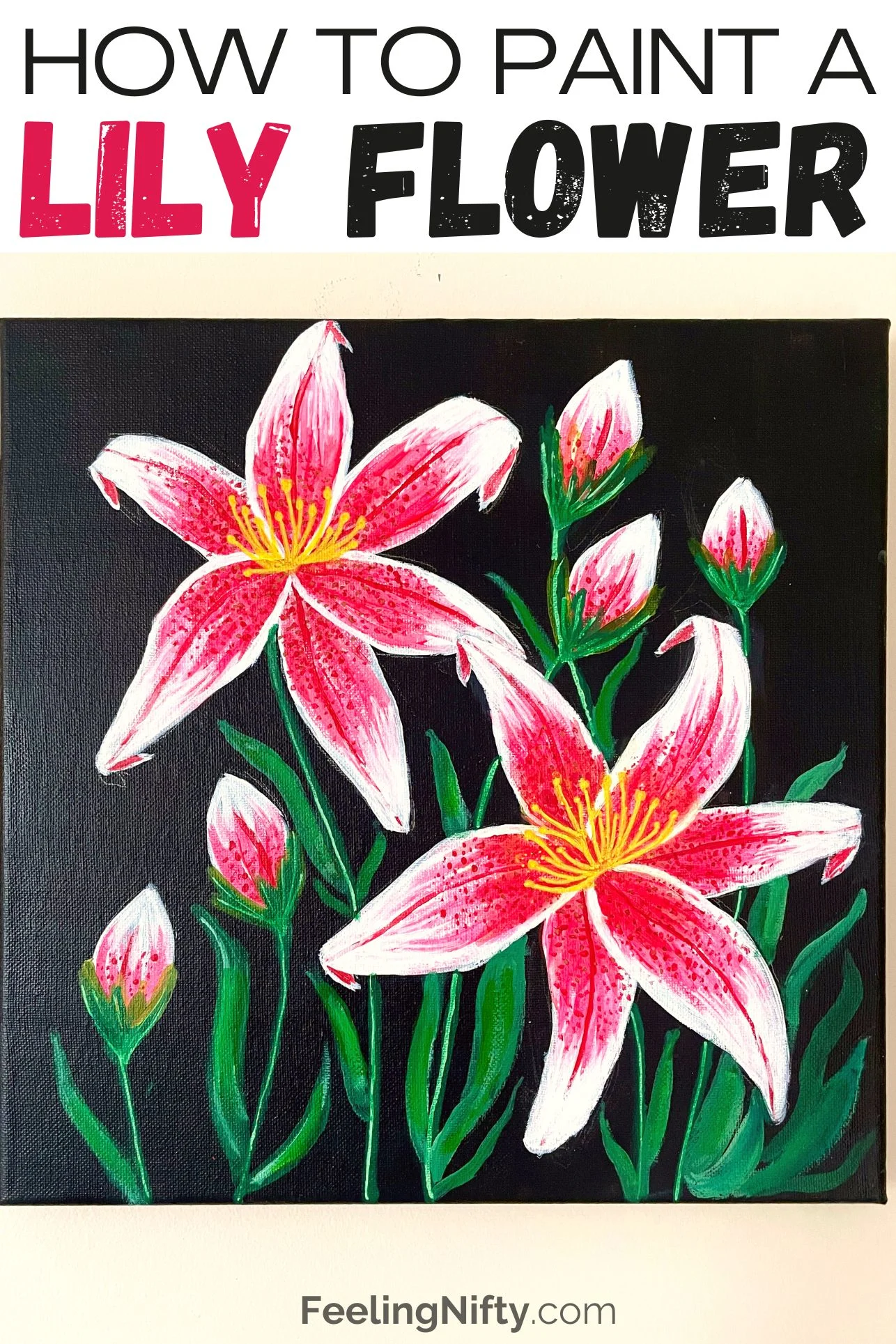
The composition is balanced, with the arrangement of flowers and buds creating a cohesive visual flow. The black background emphasizes the vibrancy of the blooms, while the red-and-white gradient on the petals demonstrates a working understanding of color blending. The yellow stamens add an appealing focal point to the flower centers. However, the brushwork on the stems and buds could be refined for greater realism and detail. The technique execution for the texture of the petals is relatively strong but might benefit from softer transitions between the white and red tones.
Strengths
- Effective Use of Contrast: The stark black background adds drama and directs focus to the flowers.
- Dynamic Flower Shapes: The bold, curvilinear petals and their directional markings lend energy to the design.
- Color Scheme: The red, white, and green palette is harmonious and visually appealing, with the yellow stamens providing a lively accent.
Areas for Growth
- Petal Details: Expand on texture and shadowing for dimensionality. Softer blending can enhance the realism, particularly where red transitions into white on the petals.
- Stem and Leaf Definition: The green stems and leaves feel slightly flat. Adding tonal variations and layered shadows can heighten realism.
- Bud Realism: The buds look somewhat rushed and lack intricate detail. Incorporate subtler gradients and natural variation to mimic actual growth stages.
BFA-Level Insights
Historically, floral paintings have been a cornerstone of still-life work, often symbolizing themes of beauty, fragility, and growth. This piece aligns with traditions found in Baroque still-lifes, where light contrast heightens the emotional resonance. Conceptually, this may benefit from a deeper story—what do lilies mean to you, and how can you visually express your interpretation of them? For professional development, continue exploring brush techniques, refining gradients, and considering symbolic motifs to deepen conceptual layers.
You’re off to an excellent start in mastering visual storytelling! Push yourself to achieve greater fidelity in the details while keeping your bold compositions alive.
Feedback on Artwork: Lily Flower Sketch
Technical Analysis
The composition effectively draws attention to the vivid flowers as focal points, balanced by smaller buds and foliage. The vibrant pinks and reds create an engaging contrast against the stark black background, ensuring the flowers stand out dramatically. The use of yellow in the stamen adds a pop of color and contrast within the petals. Brushstrokes for texture and detailing on the flowers are confident, but there's room for refinement to enhance the petals' shading and gradient transitions. The stems and leaves, while functional, could use more variation in tone and blending for realism.
Strengths
- Color Choices: The bright and energetic palette of reds, pinks, and yellows works beautifully to create a cheerful, eye-catching atmosphere.
- Composition: The placement of flowers and buds creates a natural sense of movement and direction for the viewer's eye.
- Bold Contrast: The black background successfully frames the piece, making the subject radiate off the canvas.
- Textures: The speckled detailing on the petals adds visual interest and showcases thoughtful craftsmanship.
Areas for Growth
- Petal Shading: Introduce smoother color transitions between the white edges and deep pink centers to achieve a more dimensional effect. Blending techniques like glazing or layering might be helpful here.
- Leaves and Stems: Add tonal variations and shading to create depth in the foliage. Consider light highlights or shadow gradients to make them feel more lifelike.
- Background Dynamics: While the black background is striking, incorporating subtle patterns or textural interest could provide an additional layer of intrigue.
- Bud Development: Enhance details on the buds with finer strokes to match the precision seen in the flowers. Adding slight highlights or shadowing will improve their sense of volume.
BFA-Level Insights
This artwork visually connects with the tradition of using botanical subjects in art, present in works by artists such as Georgia O’Keeffe, who explored expressive flower forms. The bold color scheme echoes modern illustration styles, blending nature with an energetic aesthetic. Conceptually, the lily symbolizes purity and rebirth, which could be explored further in future works through narrative or symbolic layering.
For professional development, experiment with different lighting effects, such as backlighting or directional lighting, that can enhance depth and realism. Practice varying brushwork to balance detailed rendering with expressive strokes, pushing emotional and textural depth in your future projects. Keep challenging yourself with timed sketches to build speed without compromising precision.
Stay confident—this is a vibrant and promising start!